Panna Cotta: Quick, Easy, and Delicious Dessert!

panna cotta

I never tried to make Panna Cotta at home until recently, and now wish I’d made the leap a long time ago!  Not the usual gelatin dessert; this dish transports you to fine-dining cuisine. Smooth and creamy but not overly rich; this dish can be eaten with any meal of the day and varied to match your creativity.  Herbs, flavorings, & toppings can change this simple dish easily.

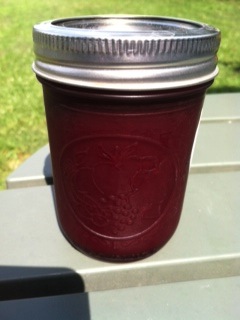
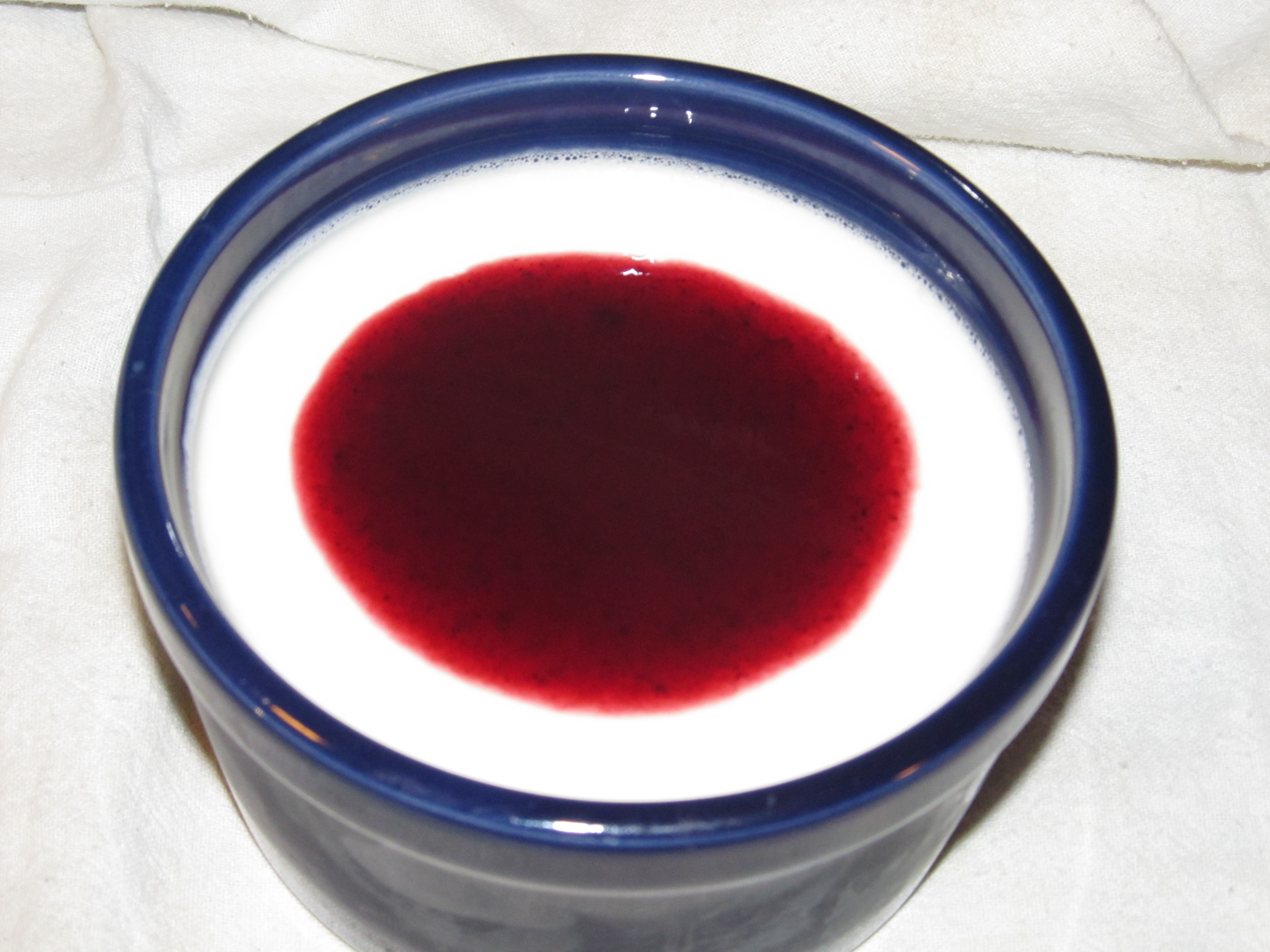
I modified the recipe below, as per usual, depending on what I have in the refrigerator at the time.  I don’t keep whole milk in the house and only had 2 cups of fat-free half and half at my disposal.  I substituted 2 cups of 2 percent milk to add to the half and half.  The panna cotta came out wonderfully, making me question if I’d prefer the enriched version.  Perhaps this substitution merely demonstrates the flexibility of the recipe.  I topped the dessert with home-made blackberry cordial syrup I made last summer using our own blackberries!  A Delicious and Fresh way to endure a cold and snowy winter…

Panna Cotta

1 cup whole milk

1 tblsp unflavored powdered gelatin

3 cups whipping cream

1/3 cup honey

1 tblsp sugar

pinch salt

berries to garnish

Sprinkle gelatin over milk in a cold saucepan.  Allow to sit for 3-5 minutes to soften gelatin.  Stir over medium heat till gelatin dissolves but milk does not boil, about 5 minutes.  Add cream, honey, sugar, and salt.  Stir till sugar dissolves, 5-7 minutes.  Remove from heat and pour into the container of your choice (ramekins, wine glasses, etc)  Chill 6 hours.  Top with fresh fruit to serve.

For those who like almond and don’t particularly like the strong flavor of honey, try this recipe…

Vanilla-Almond Panna Cotta

1 cup almond milk, divided

1 (1/4-ounce) package unflavored gelatin

1 1/2 cups heavy cream

1/2 cup sugar

1/2  tsp plus 1/4 tsp almond extract

1 tsp vanilla extract

1/4 cup chocolate fudge syrup for garnish

Pour 1/3 cup almond milk into a small bowl and stir in gelatin.  In medium saucepan stir together the cream, remaining almond milk and sugar.  Bring to boil over medium heat.  Watch carefully not to scorch.

Pour gelatin and almond milk into cream mixture and stir until gelatin is dissolved.  Add 1/2 tsp almond extract and vanilla extract and cook for 1 minute, stirring constantly.  Remove from heat and pour into ramekins (or vessel of your choice).

Allow ramekins to cool uncovered.  When cool cover with plastic wrap and refrigerate at least 4 hours or overnight.

To serve:  Mix 1/4 tsp almond extract with chocolate fudge syrup (or your preferred topping) and drizzle over the top of the panna cotta.  For a stylish presentation, Cotta may be removed from the ramekin by dipping into hot water briefly and overturned onto plate, then drizzled.  Fresh fruit and mint garnish always dresses up the dish for those wishing to make a beautiful presentation.

Please give Panna Cotta a try.  You will be glad you did.  There are many recipes out there with endless variety to match every palate.  This Simple Pleasure is easy to make and serve, and nearly healthy!  Why not give it a try soon?

Posted in activities, DIY, Life's Simple Pleasures, Recipe | Tagged , , , , , , , , , , , , , , | Leave a comment

Great Way to Get Your Greens: Kale Chips

My garden is ready for old-man winter, except for the brussell sprouts and kale. It’s nice to see something green and growing at this time of year. I had an abundance of kale this year and tried a new way to prepare it that is worth sharing with others. Simply cut the kale into approximately 1 inch pieces, drizzle with canola or grapeseed oil, sprinke with a bit of salt and mix until kale is coated. Spread out over a cookie sheet in single layer.  Bake at 350 degrees F until leaves are crisp. Watch closely because the leaves burn easily. When finished your chips should be green and crisp but not browned. Cool and store in sealed container. These chips are delicious and quick to fix. Try this simple pleasure and have a healthy snack ready for munching.

Posted in DIY, food preservation, gardening, Health, Household, Life's Simple Pleasures, Recipe, Uncategorized | Tagged , , , , , , | Leave a comment

Homemade Cheese Crackers; too good not to try!

These smell delicious and taste great!

These smell delicious and taste great!


Too good to be true?; Not really!  Making these flaky and flavorful cheese crackers at home is quick, easy and a great activity to do with your children.  You only need 6 ingredients which you probably already have in your pantry right now!

Ingredients

6 oz Sharp Cheddar Cheese, shredded

1/4 cup butter, softened and cut into pieces

3/4 cup flour (plus a little more for dusting)

1/2 tsp salt

1/2 tsp crushed red pepper flakes (adjust amount to taste)

1 Tblsp milk

The How To….

1.  Preheat oven to 350 degrees.  Grease baking sheet or line with parchment paper or  silicone mat.

2.  Place first 5 ingredients in food processor, and pulse until it forms crumbles.

3.   Add milk and process until dough forms.  Don’t over process!

4.  Remove dough from processor and form into a ball.  Flatten onto floured work surface.  Parchment paper, dusted with flour works great to roll out the dough so it’s easy to lift without sticking.

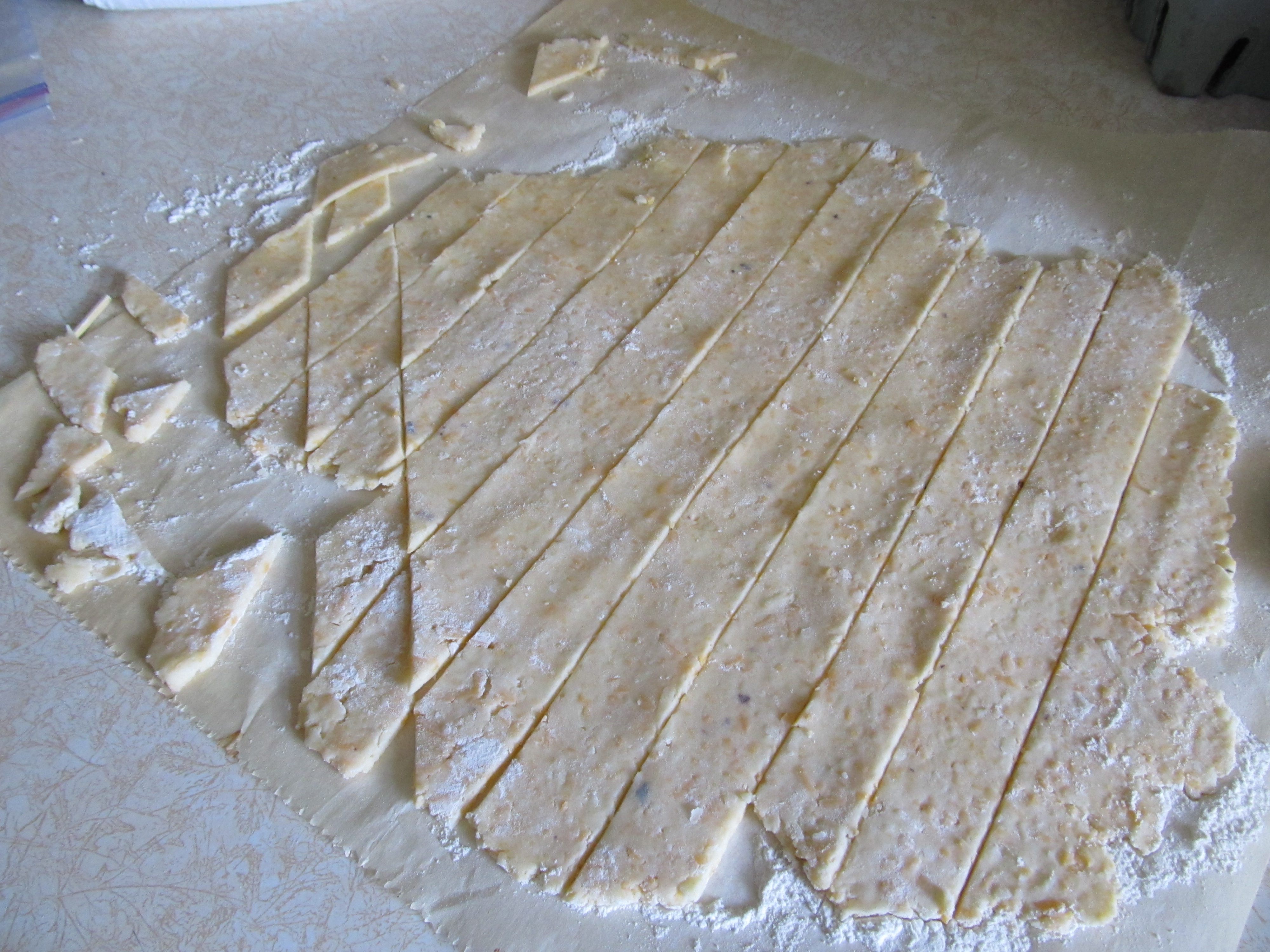
Roll the dough to 1/8th inch and cut into shapes about 1 inch in size.  I cut these into diagonals.  Note I used parchment paper to roll them out.

Roll the dough to 1/8th inch and cut into shapes about 1 inch in size. I cut these into diagonals. Note I used parchment paper to roll them out.

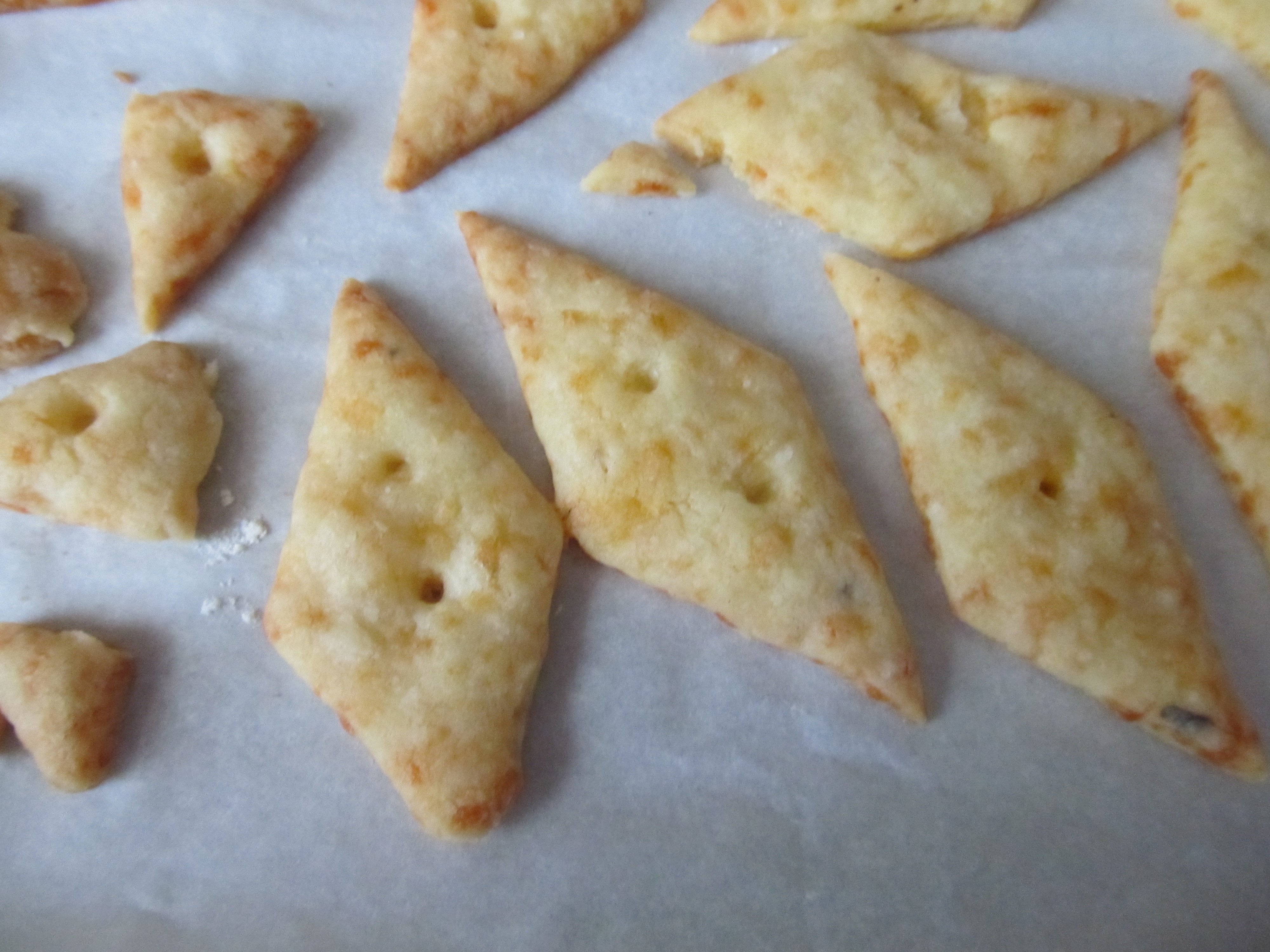
The blunt end of a wooden skewer makes a great hole.  The hole helps keep the cracker flat when baking.  I added two holes because of the diagonal shape.

The blunt end of a wooden skewer makes a great hole. The hole helps keep the cracker flat when baking. I added two holes because of the diagonal shape.

5.  Roll dough 1/8 th inch thick into a rectangle.

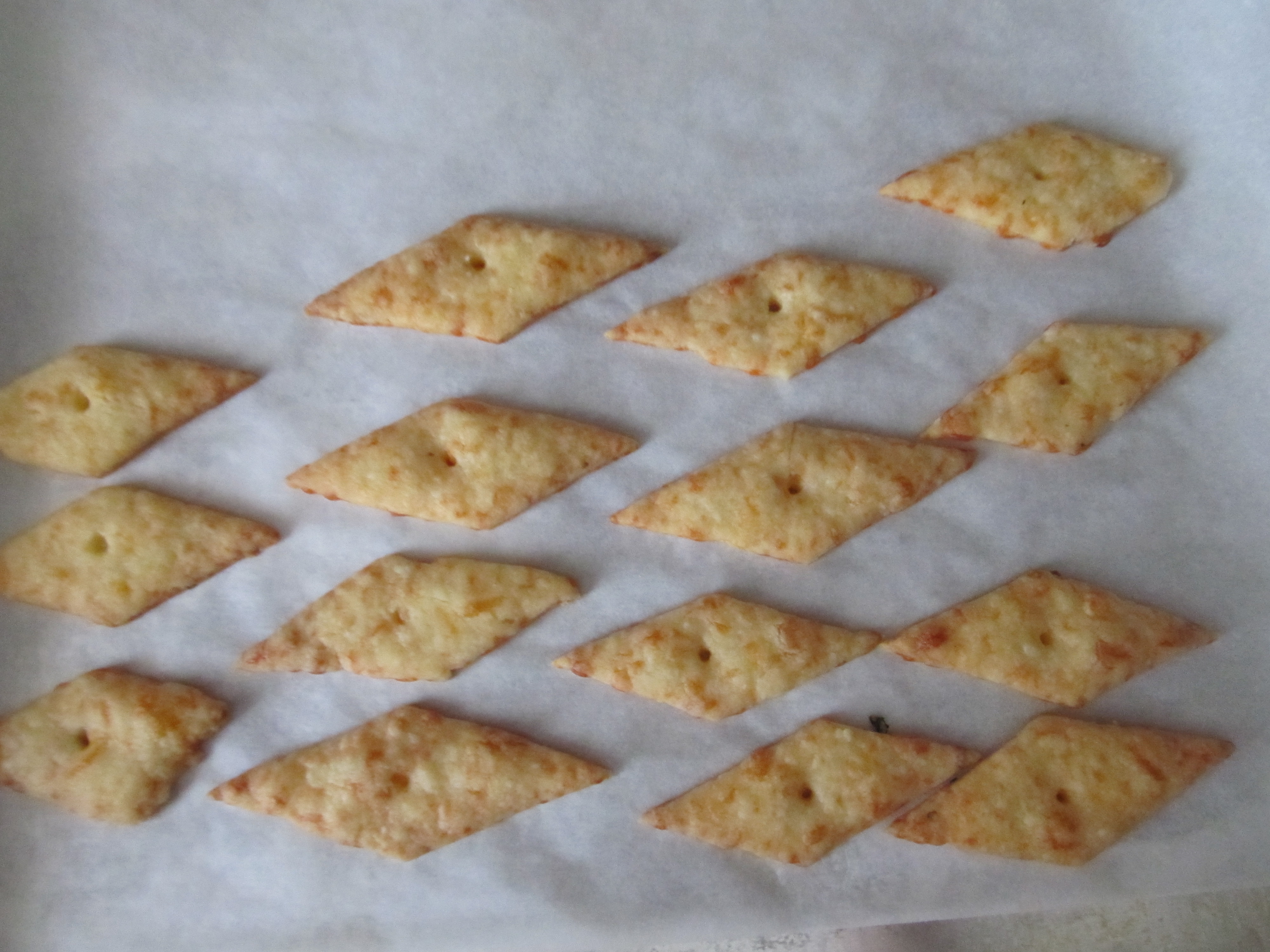
6.  Using a pastry or pizza cutter, cut dough into one inch squares or diamonds.  Using the flat end of a wooden skewer, poke a hole in the center of each cracker.

7.  Transfer crackers to prepared baking sheet.  They may be placed fairly close to one another because they do not spread much.

8.  Bake for 12-15 minutes until edges begin to brown.  Do not over-bake!  Cool and store in airtight container.  They should be eaten with a few days to prevent the butter from going rancid, especially in hot weather.

These crackers would be great for a party snack or an anytime snack!  Seek out Life’s Simple Pleasures and make these crackers soon.

Posted in activities, DIY, gift ideas, Life's Simple Pleasures, Recipe | Tagged , , , , , , , , , | Leave a comment

The Joys of Blackberry Jam

Quarter Amish is in the midst of blackberry season and the plants are being quite generous!  Customers share they enjoy the picking experience, but many don’t know quite what to do with the berries they just picked.  Berries are one of the easiest items to preserve for later use.

Quarter Amish Seedless Blackberry Jam.  Ingredients: Blackberries and Sugar

Quarter Amish Seedless Blackberry Jam. Ingredients: Blackberries and Sugar

To freeze berries, lay in a single layer on a cookie sheet and freeze until firm.  Bag in freezer bags marked with the date and berry type. I use a vacuum sealer because contents keep longer without freezer burn, but quality freezer bags work great too.  To use frozen berries, remove the amount you require, reseal the bag, and return to the freezer.  After I open a vacuum sealed bag, I place it into a ziplock freezer bag before returning to the freezer.

Making jam is an easy process that yields a sweet delight.  Jam is one of those things that give reason to have toast in the morning or biscuits for supper.  Jam also is frequently shared with others as a gift or token of friendship.  Jam can be used as a condiment or as an ingredient.  I love to use fruit jams on pancakes, waffles, french toast, and frosting for cakes.  I also use jam as a marinade for chicken and pork roasted or grilled meat dishes. 

The How-To….

Equipment

Large stockpot or kettle

potato masher

sieve or sauce maker (optional for seedless)

spatula

Ingredients

9 cups crushed blackberries (or blueberry, boysenberry, dewberry, gooseberry, loganberry, raspberry, or youngberry)

6 cups of sugar

I list the suggested amounts to make a batch of jam yielding approximately 3 pints or 6- 1/2 pints.  The rule of thumb is 2/3 c sugar for every cup of crushed berries in case you don’t have exactly 9 cups.  Use a potato masher to crush berries to a consistent texture.

If you wish to have seedless jam, remove the seeds from the pulp by forcing crushed berries through a sieve/strainer.  It takes a varying amount of time depending on which equipment you choose to use. 

Weston Stainless Steel Cone Strainer & Pestle Set

The process is the same for either of the items shown above.  Crush the berries then using a spatula or pestle force the pulp through the sieve.  Expect to spend 15-30 minutes removing seeds unless you use something like the Norpro Sauce Maker food strainer. 

The Sauce Maker can be used with a variety of food items and takes about 5 minutes to seed enough berries to make a batch of jam.  Pour the fruit in the top, turn the handle and catch the pulp in a shallow container.   The hand strainer costs between 5-15 dollars, the jam strainer about 30-40 dollars and the sauce maker between 50-60 dollars.  For those of us on a budget, summer brings canning supply sales at local stores and fall brings clearance sales; so keep your eyes open. If you frequent yard sales, auctions,  or thrift shops you might be able to find these items for just a few dollars each.

Cooking

Combine the berry pulp and sugar in a large saucepot. Bring slowly to a boil, stirring until sugar dissolves.  Cook rapidly to the gelling point.  Mixture will thicken and requires frequent stirring to prevent sticking.  Ladle hot jam into hot jars, leaving 1/4 inch head-space.  Adjust two piece caps and process 15 minutes in a boiling-water bath canner. 

A word about jars and lids…..Wash jars in hot soapy water and rinse in hot water.  You can also run jars through the dishwasher to clean and sterilize.  Do this just prior to filling to keep jars hot.  If you put a hot product into a cold jar the glass could break.  Care must also be taken with the lids.  If using two-piece lids, hold lids only in boiling water until used.  Immediately after filling jars wipe the rim with a damp cloth to remove any drips then using a magnet wand to remove lid from boiling water bath and place on jar.  Use the band to screw the lid down firmly. 

Place the jars in a water bath canning rack and gently lower into hot water.  Wait until the water returns to a boil then begin the timer.  After 15 minutes of boiling, lift the rack and remove the jars with a jar lifter.  Place on a towel with enough space between jars to allow even cooling.   As the jars begin to cool you will hear the “ping”  as the lids seal the jars.  Leave for 24 hours undisturbed.  Remove the screw band and check to make sure the lid has sealed tight, then wipe jars to remove mineral deposits and mark with contents and date.  Jars are usually stored with the bands removed so they don’t rust into place.  If the jars are taken out of the home or given as gifts replace the band to prevent accidental opening of the jar.

Gel Point

Soft spreads can be made without using pectin because many fruits contains enough natural pectin to thicken the spreads naturally.  Soft spreads continue to thicken as they cool and the exact thickness of the final product cannot be determined at the time of cooking.  For a softer spread shorten the cooking time and for a thicker spread extend the cooking time.  Depending on the type of berry used it may take up to two weeks for the product to gel; although most recipes gel within 24 hours.

I use the spoon test when making jam most often.  Dip a cool metal spoon into the boiling jam.  Remove from heat and steam and tip the spoon allowing contents to spill.  At first  drops are light and syrupy.  As cooking continues the drops become larger and thicker.  When the gel point has been reached the jam sheets off the spoon in a congealed flake. 

You can also test for gelling by dropping a small amount of jam onto a chilled plate.  Place in freezer briefly then remove and allow to reach room temperature.  Gently run a finger through the mixture.  If it separates then slowly returns to original, it is ready to process.

Jam making is a simple pleasure which preserves summer’s rich scents and flavors.  Preserving your own allows control over the ingredients and the final product makes a great gift for those we care about.  Why not be adventurous and try making blackberry jam soon!

Seedless Blackberry Jam processed and ready to be eaten, stored, or shared with others.  Jam makes a great gift.

Seedless Blackberry Jam processed and ready to be eaten, stored, or shared with others. Jam makes a great gift.


Posted in activities, DIY, food preservation, gift ideas, Life's Simple Pleasures, PYO berries, Recipe | Tagged , , , , , , , , , , , | 1 Comment

Taking Reservations for blackberry picking slots

The sun has come out and the berries are ripening at a quicker pace.  Quarter Amish is now taking reservations for blackberry picking slots for the week of July 15-20th.  If you are interested in reserving an appointment please contact beiersdo@nalu.net.

Reserve your picking appointment soon!

Reserve your picking appointment soon!

Posted in activities, DIY, for purchase, PYO berries, Seasonal | Tagged , , , | Leave a comment

DIY Conditioning Hair Rinse

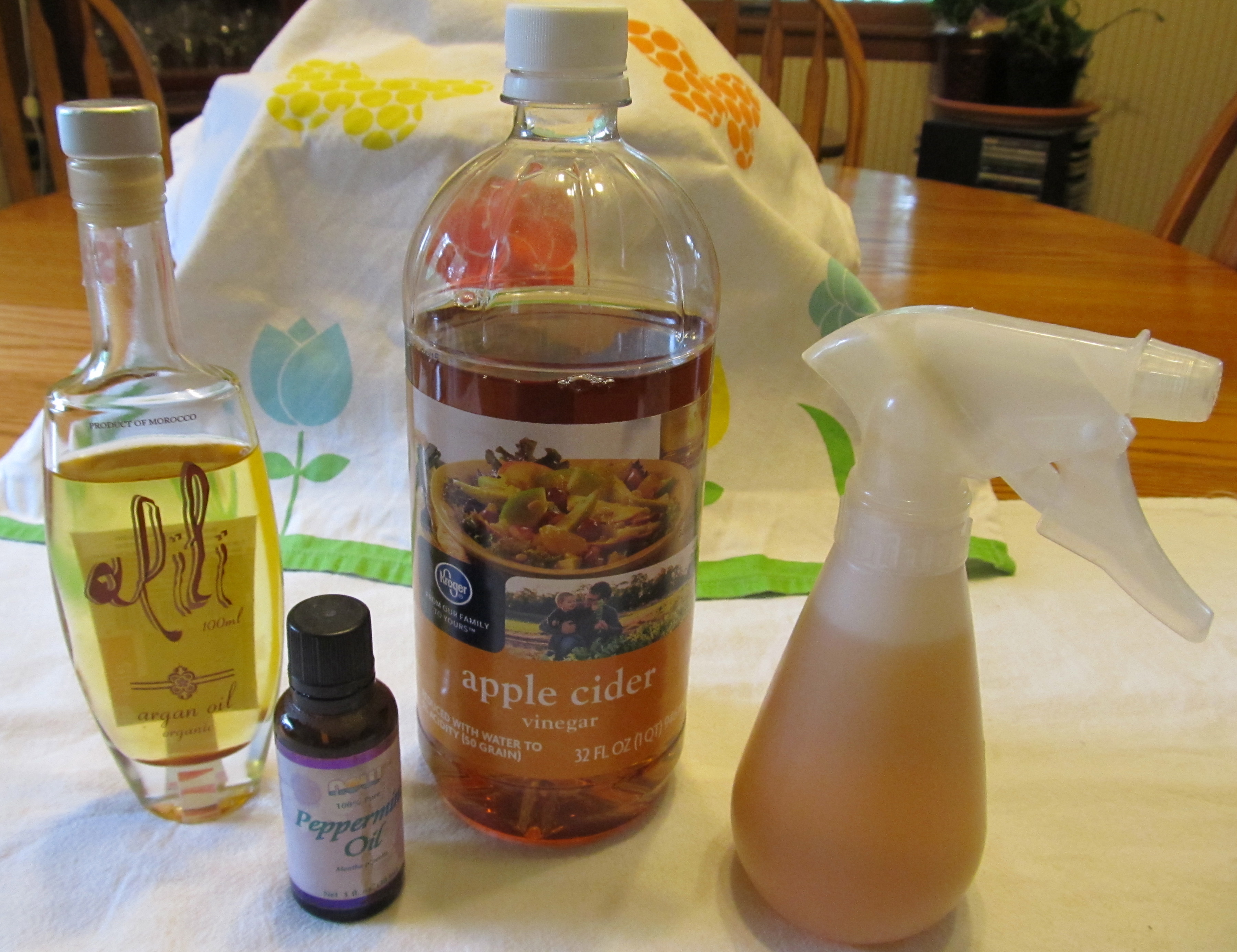
Argan Oil, Peppermint Oil and Cider Vinegar

It’s quick, easy and effective, resulting in a great conditioning hair rinse.

I experimented making my own bath and beauty products as a teenager and never seemed to tired of it.  Recently  I started using cider vinegar as a hair rinse and love the simplicity.  It makes my hair soft, manageable and full of body.  That is high praise coming from a woman with fine hair!  I recently needed to improve the condition of my hair because during the summer I spend so much time outside under the sun, and I found just the right product to protect and nourish my hair.  My daughter gave me a bottle of Argan Oil as a gift and beauty aid.  I used it as a facial conditioner and thought it had possibilities for my hair.  Argan Oil comes from the Middle East and is made from a tree nut.  Women cooperatives are known for working together to manufacture and market this product, and I love to support initiatives  which positively affect women around the world.

The ingredients are simple and few.

Cider Vinegar, Peppermint Oil, Argan Oil, and water.

You will need to purchase a spray bottle.  Fill the container 2/3 to 3/4  full of cider vinegar.  Add a few drops of peppermint oil and 1/4-1/2 tsp argan oil.  Fill the bottle with water. I use tap water because I have a well, but suggest distilled water for those on city water.  I encourage that you experiment with the oil amounts that work best for you.  Given my fine hair I cannot use large amounts of oils; you may need to increase the amounts suggested.

To Use

Simply shake the bottle to mix the oils and spray on hair after washing and rinsing.  Rub through the hair evenly and rinse with warm water.  My spray bottle sits in the shower at the ready.  That’s it!  What could be easier?

I hope you give this recipe a try while enjoying the simple pleasure of making and using your own conditioning hair rinse.  I would love to hear back how it works for you!


Posted in activities, bath and body products, creativity, DIY, gift ideas, Life's Simple Pleasures, Recipe, Uncategorized | Tagged , , , , , , , , , , , | Leave a comment

Heavenly Raspberry Shortcake!

A good way to use raspberries.

The taste of sweet raspberries and fluffy cream cheese in every bite!

Red Raspberries are one of our favorite family fruits.  This year our harvest is limited, and treasured.  What do you do with 2 quarts of fresh red raspberries?  They could be frozen individually on a cookie sheet and then stored in the freezer in a plastic bag to be enjoyed later in the year; or they could be used right away in this delicious shortcake.  My family thought the recipe was so delicious, I wanted to share it before I forgot how I did it. I am not one to rely solely on recipes; or measuring for that matter.  Creativity is the spice of life.

Ingredients

Filling

2 qts raspberries-divided

1- 8 oz. package cream cheese

1/2-1 cup powdered sugar (to taste)

1 tsp almond extract

1 package unflavored gelatin

*sugar may be added to taste to the crushed raspberries used for puree

Shortcake

*Amish Country Cookbook Vol I, collected by Das Dutchman Essenhaus– This recipe book series is my primary resource for the majority of the cooking done in my home!  Simple and delicious options for every meal can be found using simple ingredients commonly found in many kitchens.

2 1/2 c all-purpose flour

2 tsp. baking powder

1/2 tsp. salt

2 eggs

1 c sugar

1 c milk

1 Tblsp butter, melted

1 tsp. vanilla

Sift flour; measure and add baking powder and salt.  Sift again.  Beat eggs, sugar, milk, and vanilla.  Combine egg mixture with dry ingredients; add melted butter and beat until thoroughly blended.  Pour into greased cake pan(s).  Bake at 375 degrees for 25-30 minutes.  Serve warm with crushed, frozen or fresh berries, milk, or ice cream.

* This recipe made enough batter for 2-8″ cake pans.  You can use one and freeze the other for later.  Wrap the cooled baked shortcake in plastic wrap, than place in gallon size freezer bag.  Will keep 6 months.

To Prepare the Raspberry Shortcake

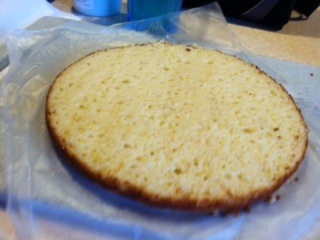
Cut the shortcake in half with a long bread knife to make two layer cakes. Set aside.

Make sure shortcake is completely cooled before trying to divide into two layers.  The porous surface soaks up the puree to infuse the berry taste.

Make sure shortcake is completely cooled before trying to divide into two layers. This porous surface soaks up the puree  infusing the berry taste through-out.

Using a mixer, whip cream cheese and 1 cup powdered sugar until well blended.  A dash of milk will help.  Add the almond extract and mix until light and fluffy. Set aside.

Puree

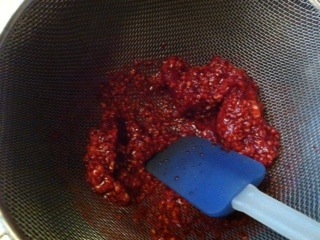
Take 2-3 cups of raspberries and crush with a potato masher.  Mash well; strain puree through a sieve using the back of a spoon or spatula to work the pulp through.  Work until all that remains are the seeds.  Discard seeds and continue.

Work the puree with a spatula or spoon until only seeds remain. It takes a few minutes.

Work the puree with a spatula or spoon until only seeds remain. It takes a few minutes.

Stir 1 package of unflavored gelatin into 1/4 cup cold water and let the gelatin absorb a few minutes.  Stir into the puree, with added sugar to taste. Let sit a few minutes until it begins to thicken.

Spoon half of the puree over the bottom layer of shortcake than spread a layer of cheese mixture over the top of that. Layer the Cream Cheese mixture with raspberries.

Yummy!

Layer the Cream Cheese mixture then place whole raspberries in concentric circles to fill the entire space.


Next place the top layer of shortcake over the first layer.  Repeat the process, except pour the puree over the cheese mixture and raspberries instead of into the shortcake.  The cake should be refrigerated 45 minutes to an hour, to firm everything up.  We chose not to wait that long and it still tasted delightful and held together well.  Enjoy!!!

Life is full of simple pleasures that bring joy to everyday living.  Take time to nurture and relish those moments.

It was hard to resist this delicious summer dessert once it was on the table!

It was hard to resist this delicious summer dessert once it was on the table!

Posted in activities, creativity, DIY, Household, Life's Simple Pleasures, Recipe, Seasonal, Uncategorized | Tagged , , , , , , , , | Leave a comment

Pick Your Own Blackberries!

High Tunnel greenhouse planted with blackberries and raspberries;  trellised to make picking easy.

Last year began an adventure on our farm.  My husband, the horticulturist, built a high-tunnel greenhouse and together we planted two hundred thorn-less blackberry plants along with some red raspberries. We tended and nurtured the plants, and with great anticipation, happily announce we will offer blackberries for picking within 7-10 days. Ripening depends on the weather, so please contact us prior to the trip for berry availability to prevent wasted trips.  Once the season gets underway operational hours will be posted.

Quarter Amish is listed  on PickYourOwn.org.  A visit to this site helps you find U-Pick farms in your area and a vast resource of links: picking tips, freezing berries, making jams and jellies, etc.  Please take a moment to check us out and if you wish, relay additional information that would be useful in our listing.

If you live in South East Indiana, consider taking an opportunity to visit our farm and pick sweet juicy blackberries with the family.  If you are interested in responsible agriculture, my husband and I welcome the chance to share our knowledge about raising fruits, vegetables, dairy goats, chickens and alpacas with others.

Blackberries are a wonderful addition to your diet as they provide fiber, a host of vitamins, minerals, and antioxidants.  They are low in calories and have a low glycemic value for those working to keep blood sugar levels steady. They keep in the refrigerator for several days and can be easily frozen to enjoy all year long. Blackberry jam or syrup makes a great homemade gift that always is appreciated.

Sweet, juicy, and healthy!

Sweet, juicy, and healthy! One of Many Life’s Simple Pleasures!

Posted in activities, DIY, for purchase, Life's Simple Pleasures, PYO berries, Seasonal | Tagged , , , , , | Leave a comment

Simple Summer Pleasure: Yogurt

I am so glad I discovered the trick to making great yogurt at home!!  I find summer heat can upset my digestion and a cool bowl of home-made yogurt with fresh fruit or agave sweetener, or a smoothie made with yogurt, fresh fruit and avocado really hit the spot.  If you have not tried my recipe, you are missing out.  Commercially made yogurt is expense and creates individual packaging that needs to be disposed of.

Make Yogurt at Home

Heat one-half gallon of milk to 180 degrees over medium heat.  It makes no difference between skim, 2% or whole milk; choose what fits your nutritional needs.  Cool to 110-115 degrees and add cultured starter.  Starter can be purchased online through cheese making suppliers like Hoegger Goat Supply, but a trip to the grocery store will get you a plain yogurt cup of your style.  I love the creaminess of Greek yogurt, but any plain culture works (no flavoring or fruit please) .  You need only 3 Tblsp of starter for a half-gallon batch but adding a little more won’t hurt anything.

Mix the starter into the milk until dissolved completely then either pour into a yogurt maker or pour into 5 pint mason jars that have been washed in the dishwasher or boiled to sterilize jars.  Warm oven to 200 degrees F  and place the jars on a tray in the oven.  Turn off heat and do not disturb for 6-8 hours.  Overnight works great at my house and doesn’t interfere with baking needs.  After the yogurt has set up, cover with lid and refrigerate.

Yogurt Uses

Yogurt is great for smoothies, fresh with fruit or granola, frozen into ice cream, substituted for sour cream in any recipe, and can also be drained in cheese cloth to make a cream cheese type spread.  Yogurt also makes a great facial mask for gentle cleaning!

Why don’t you give it a try and let me know your favorite use/ recipe for yogurt!


Posted in activities, bath and body products, DIY, Household, Recipe, Seasonal | Tagged , , , , , , , , , , , , | Leave a comment

Starting Seeds

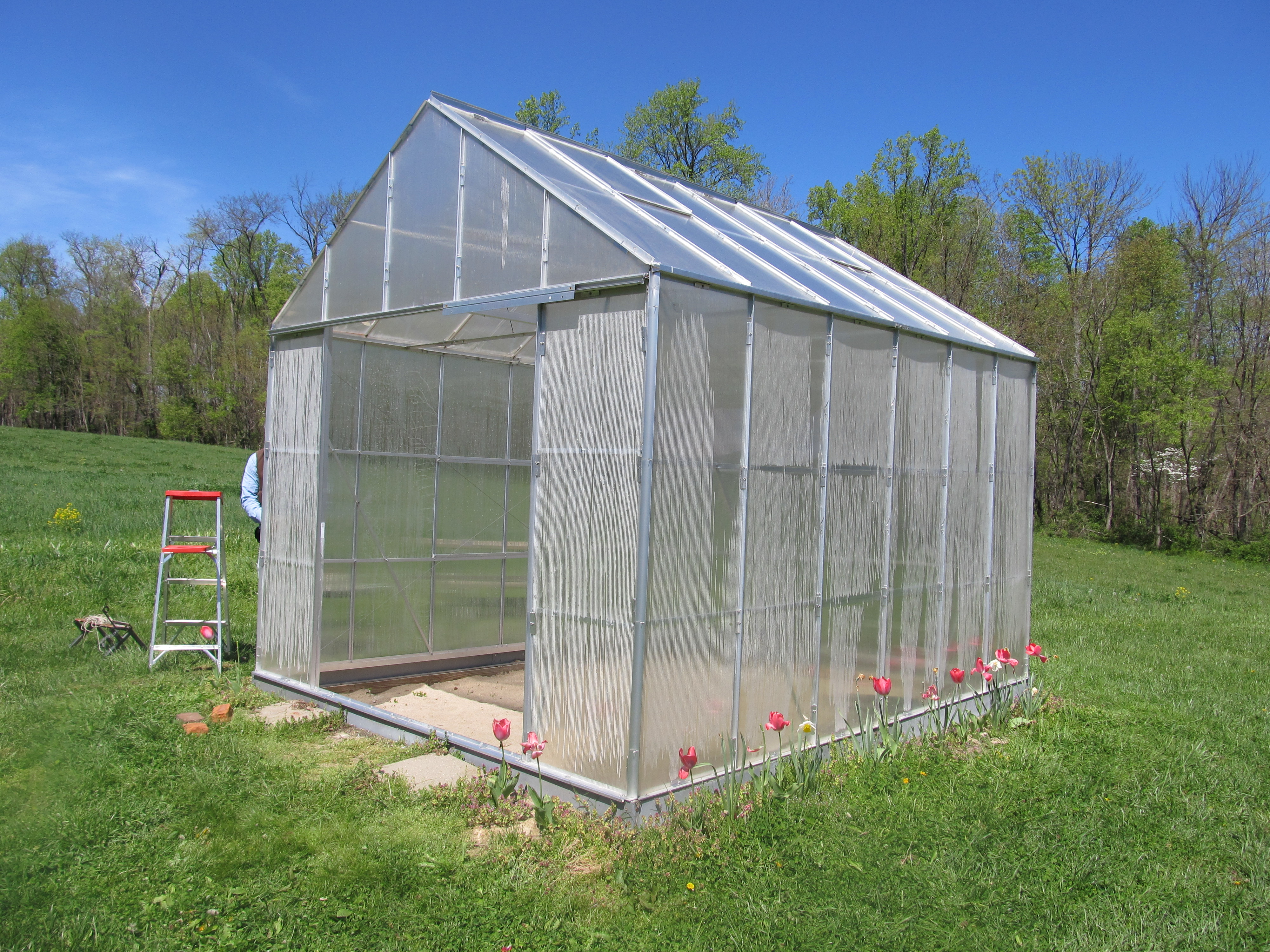
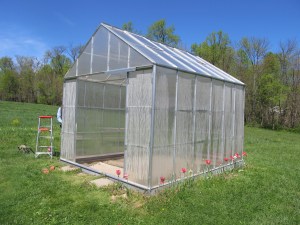
My greenhouse in the spring!

My greenhouse in the spring!

It’s mid-March in the Midwest and time to start thinking about the garden.  Like most serious gardeners, my husband and I start seeds in my greenhouse giving plants a head start on the growing season.  In January I spent hours paging through seed catalogs selecting delectable vegetable and herb seeds; all the while dreaming of summertime and fresh food.  Today I seeded four varieties of tomatoes, four varieties of sweet peppers, two varieties of hot peppers, cabbage, broccoli, brussels sprouts, cauliflower, leeks, and a variety of herbs.  It should take between 7-21 days for the seeds to germinate.

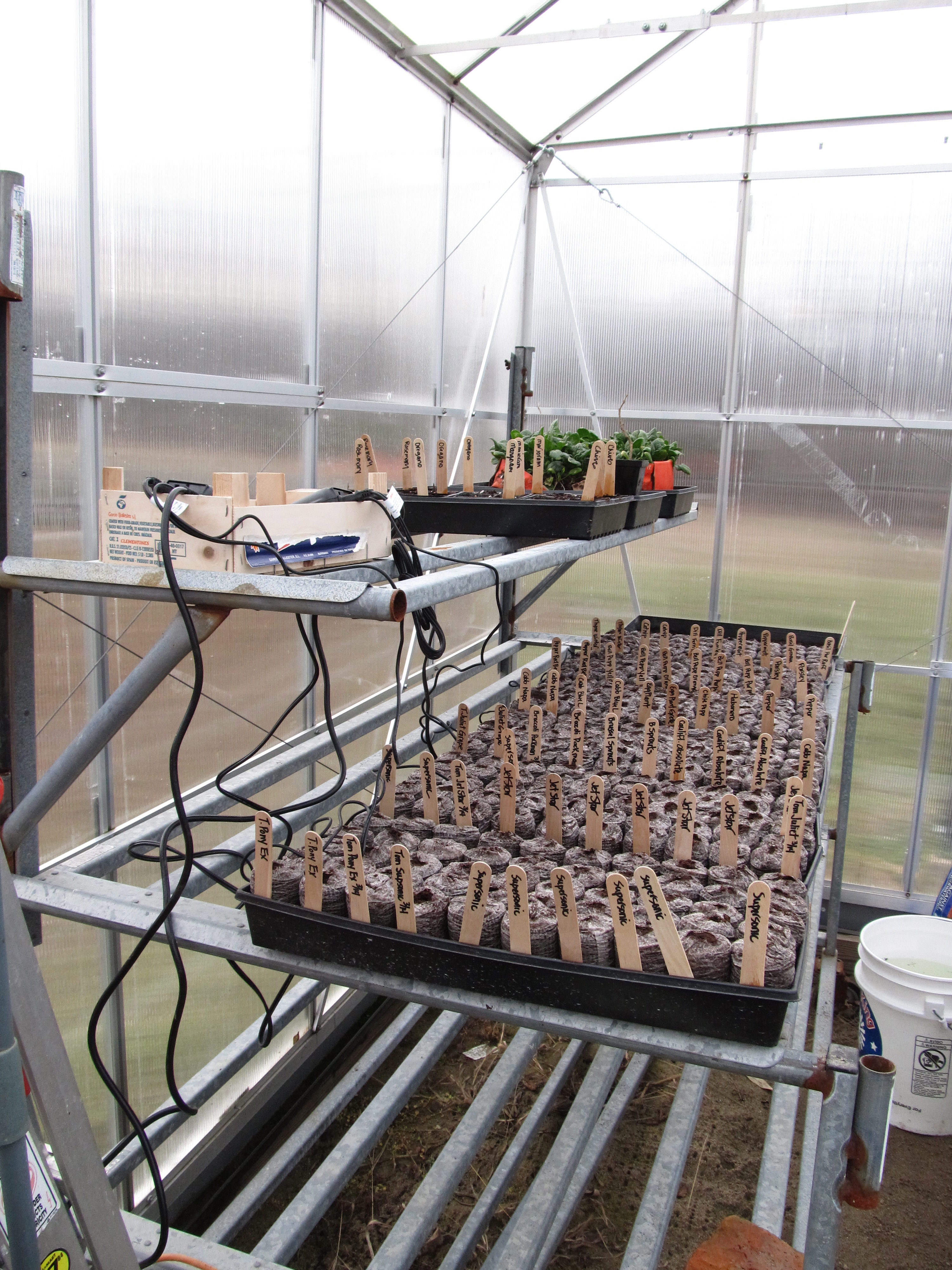
Trays of seeds sit on heating mats to increase soil temperature and improve germination.
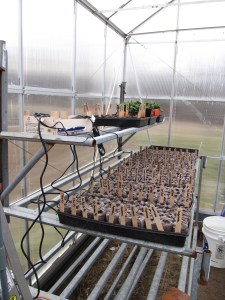
starting seeds

The greenhouse is a great space to retreat when winter just won’t give up.  On a sunny day the temperature inside is so warm you have to take your coat off to remain comfortable.  Just a few weeks from now we will have to open the doors and windows to prevent over-heating.  I think of the greenhouse as a plant nursery.  Within 6-8 weeks the plants will be moved out and into the garden.

How to start seeds….

Starting seeds is not difficult and does not require a great deal of equipment.  Seeds can be started in a sunny window in your house, but because of the number of seeds I start, the greenhouse is the best choice for me.

Equipment

  • sterile potting soil or Jiffy peat pellets
  • seed trays, individual cups, tray-pack containers
  • wooden sticks and sharpie
  • water and large container
  • heating mats (optional)
  • dibble stick (or pencil)

The process…

For most seeds, I use Jiffy peat pellets.  They come in different sizes and are very convenient to use.  Jiffy pellets come dry and compressed into little discs but have a porous skin on the outside.  To use, immerse the pellet in water in a large container, until completely expanded, then remove from water and place in seed trays, flats, etc.   Peat pellets or individual cups encourage root growth, provide a convenient way to transplant seedlings to the garden with no waste, and don’t disturb root systems.   Peat naturally retains water which is important to young seedlings which is why I prefer them to soil mixes.

I use plastic trays to hold plants, but also use what I have on hand.  Cardboard and wooden trays, or low-rise boxes work too.  You will need the container to hold up for several weeks and it will get wet.   Make sure the container allows water to drain and that it did not contain toxic material.

Once pellets are expanded and in trays, a pencil works wonderfully to make a depression in each pot.  This is called dibbling.  Check the planting depth listed on the seed packet and depress the pencil down in the center of the pot.  All that’s left to do is drop a seed in each pellet, squeeze gently to cover seed, then press down gently on the top of the pellet with your hand.  Seeds require good contact with soil in order to germinate so compressing the pellet ensures soil contacts the seed properly.  For seeds with germination rates of less than 90%, I drop two to three seeds per pellet, or if the germination rate is below 75% I suggest putting a pinch of seeds in each pellet.  You can always thin plants to one per pellet after germination. Use a marking stick to name and date the seed type started.  I recommend keeping the seed package because it contains information needed to plant the seedling into the garden.  The packet could also be laminated and used as a row marker in the garden and as a reminder of which varieties you grew.

If you don’t want to invest in peat pellets, you can purchase a wooden mold that shapes newspaper strips into a seed cup.  These are available on the internet or from seed companies.  Paper cups work too; whatever I use, I make sure it will decompose in the earth and enrich the soil in my garden.

With the exception of just a few seed types, I start my seeds in individual pellets/cups so the root system is not damaged when transplanted into the garden.  While some seedlings can be bare-rooted with success, I prefer not to interrupt root growth.  Having said that, I did plant leeks today by broadcasting them into a tray to germinate.  After the seedlings are 2-4 inches tall I will transplant them into pellets or tray packs to grow until planted in the garden.
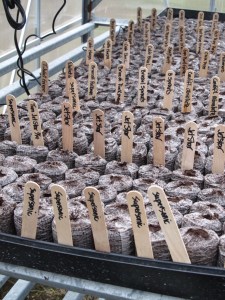
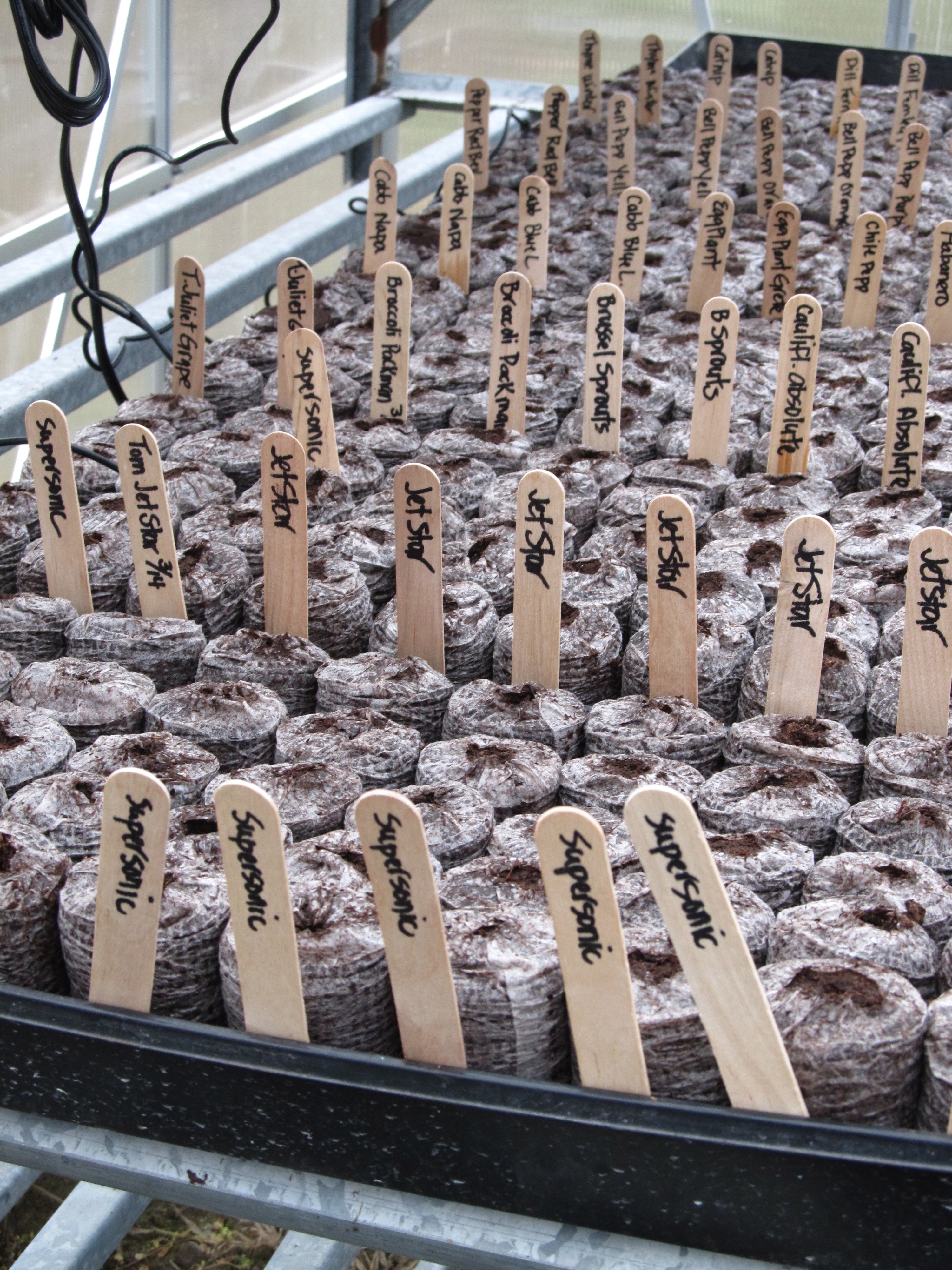
Jiffy's make easy work of starting seeds.  Make sure to identify seed types and date started.

Jiffy’s make easy work of starting seeds. Make sure to identify seed types and date started.

After seeding, the pellets, trays, cups  need to be watered regularly to maintain soil moisture.  Generally seeds germinate quicker if some humidity is present.  Once seedlings have germinated, water in the morning so the stems and leaves have time to dry before dark because excess humidity and cool temperatures encourage plant diseases.  It is necessary to check plants daily to make sure they are moist and not over-heated.  You can “cook” young plants if soil dries out or it becomes excessively warm.

After the seedlings emerge, sunlight is needed to facilitate growth.

Feeding the plants

Seedlings may be fertilized with your choice of plant food.  There are  many commercial plant foods which ensure proper plant growth when used as recommended.  Remember if using jiffy pellets, plants need to be fertilized regularly because peat does not have adequate nutrients to maintain growth.  Commercial potting soil can be purchased with slow-release fertilizer already in the mix.  However, monitor growth and begin fertilizing if growth slows.

Animal manure can be safely used as fertilizer in the garden but it is important to be aware it may contain pathogens that could be transmitted to humans.   E-coli and salmonella outbreaks occasionally make the news resulting in  public awareness that frightens consumers.  Being an informed and educated gardener removes the fear factor when using animal manure. If you raise animals and would like to use manure instead of purchasing fertilizer, do the research and follow through with recommended management procedures.  Land grant universities such as Purdue University offer  valuable resources through their extension programs.

Fresh manure should only be used on the garden in the fall after harvest, to winter-over and enrich the soil for the next growing season.  During the growing season, manure can be used but must be composted first.  Composting manure (manure needs to reach a temperature of 140 degrees F) reduces the transmission of pathogens by way of heat treatment.  Composted manure may be used as a side-dress, meaning it should not be placed directly on the plant, but tilled into the soil surrounding the base of the plant.  Do not apply directly onto plants.  Root vegetables should be washed thoroughly before being consumed.

An important note

Compost is a wonderful thing for the garden, but do not start seeds in compost!  Seeds need sterile soil / potting mixture in order to discourage disease.  Compost is best used when incorporated into the soil prior to planting.  Also if you make your own compost, make sure the compost has time to cure before using on plants.  If not properly aged, it can burn plants.

Final thoughts

We used heating mats this year, placed underneath the trays to encourage germination.  Thermostats are available for the mats allowing you to set the temperature to match the seed temperature requirements.  I have not used them in the past, and during cool springs, seed germination was delayed, reduced, or prevented.  I will let you know what germination results we get this year….

Magazines frequently recommend using egg shells or egg cartons as containers for starting seeds.  Don’t use them!  They are too small unless you are using goose eggs.  There is not enough room for proper root system development and the plants become top-heavy very quickly.

If you are hesitant about your ability in growing plants, or you think you don’t have enough time, start small.  Get a good resource on gardening or talk with a friend that gardens.  Identify a vegetable or two that you love.  Decide if you will grow them in the ground or in containers.  Take advantage of varieties that carry disease resistance.  Order seeds from a reputable seed dealer or purchase plants from your local greenhouse.

Be Bold, Be Creative… Take a chance and enjoy the Simple Pleasure of eating something you grew!
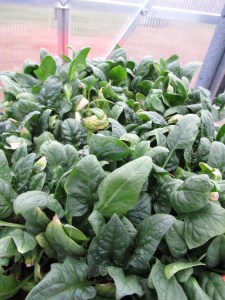
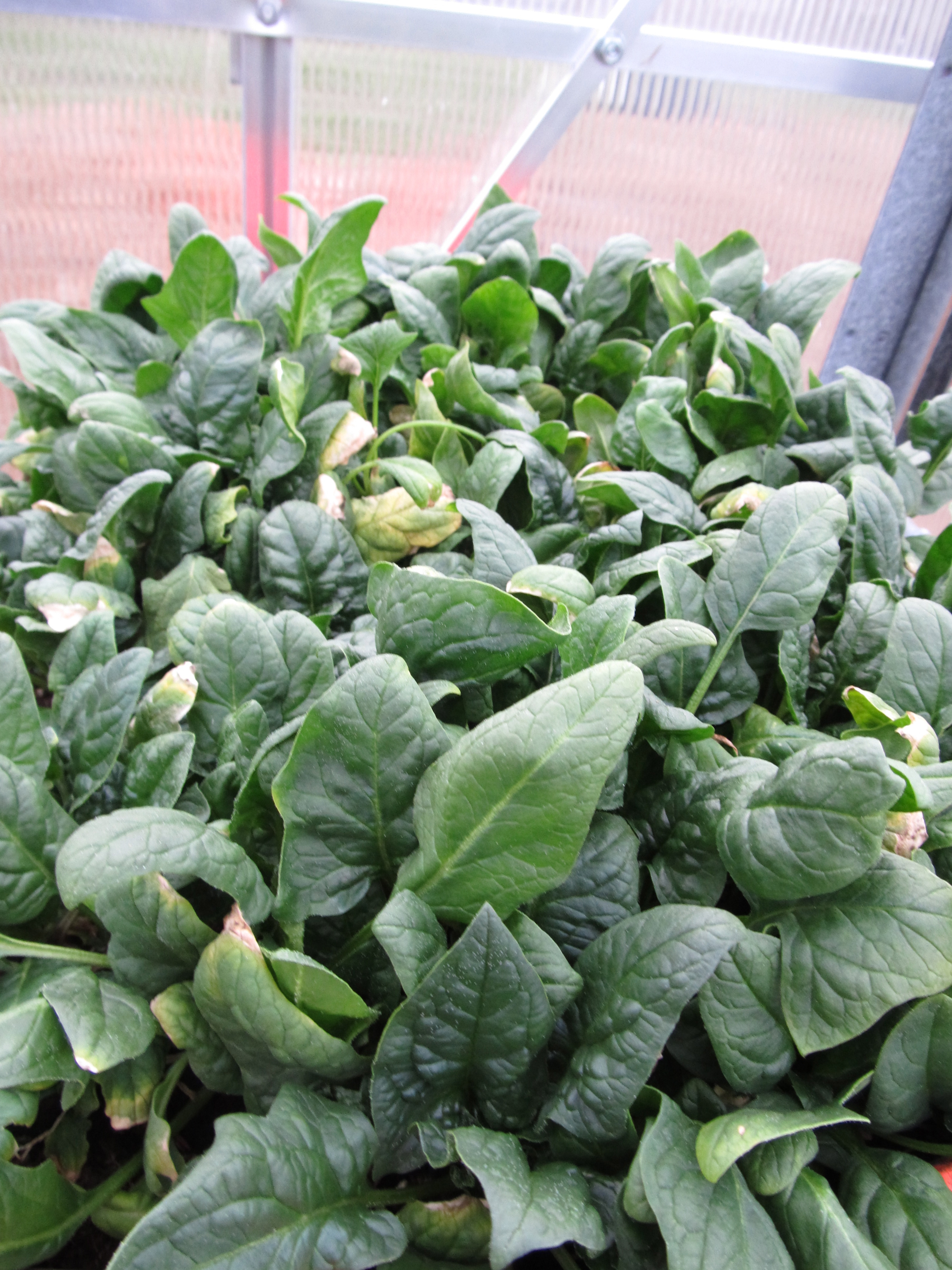
I grew this tray of spinach in my greenhouse this winter.  I harvested spinach for Thanksgiving, Christmas, and it's ready again. I'll keep it growing until the spinach in the garden is ready.

I grew this tray of spinach in my greenhouse this winter. I harvested spinach for Thanksgiving, Christmas, and it’s ready again. I’ll keep it growing until the spinach in the garden is ready.

Posted in activities, DIY, food preservation, gardening, Life's Simple Pleasures, Seasonal | Tagged , , , , , , , , , , | Leave a comment